AC · ALTERNATING CURRENT
Charge while you park
Well suited to overnight, workplace and longer parking stops.
- Common connector
- Type 2 · Single Nozzle
- Power conversion
- Inside the car
- Main limit
- Car’s on-board charger
EVKAKI · EV ESSENTIALS
Charging stations and costs, AC and DC charging, battery technology and Singapore charging operators — organised into four clear sections.
The Cheapest EV Charging in Singapore: It Depends on Your Charging Access
| Your charging access | Indicative rate | What to include in your comparison |
|---|---|---|
| Landed home | About $0.35/kWh | Household charging rate and charger installation. |
| Condominium | About $0.40–$0.60/kWh | The development’s charging agreement and operator charges. |
| Public AC | From about $0.70/kWh | Electricity, parking and any additional fees. |
| Public DC | About $0.90/kWh or higher | Electricity, parking, convenience and time saved. |
Finding the cheapest EV charging rate in Singapore starts with understanding that not all EV owners have access to the same type of charging. The cost of charging can differ substantially depending on whether you live in a landed property, a condominium with dedicated charging facilities, or rely entirely on public chargers. Before comparing charging operators and locations, EV owners should first identify which charging options are realistically available to them. This provides a more accurate starting point for determining the true cost of charging an EV.
For EV owners living in landed properties, home charging is generally the cheapest option. With a privately installed wall charger connected to the home's electricity supply, the owner essentially pays the prevailing household charging rate. Based on the current rate of around $0.35 per kWh, the cost moves in line with Singapore's regulated electricity market and the prevailing household charging rate.
This gives landed-property EV owners a significant cost advantage because they are not paying a commercial charging operator for the electricity supplied. There are also no separate public charging fees or, generally, parking charges associated with charging at home. Once the home charger has been installed, the ongoing charging cost is largely the electricity consumed.
For drivers who can conveniently charge overnight at home, this can make a substantial difference to the long-term cost of EV ownership.
For condominium residents, the situation is slightly different. While some condominiums have charging facilities installed for residents, the electricity rate is generally higher than simply paying the household charging rate at a landed property.
This is because condominium charging infrastructure involves additional costs associated with installing, operating and maintaining the chargers. The charging arrangement is typically managed through the Management Corporation Strata Title (MCST) together with a commercial operator provider (COP) responsible for the charging infrastructure.
Depending on the condominium and its charging arrangement, residents may see charging rates in the region of $0.40 to $0.60 per kWh. While this is still potentially cheaper and more convenient than relying entirely on public charging, it is no longer equivalent to the basic household charging rate.
The actual rate can differ between condominiums because each development may have its own agreement and charging arrangement.
The next category is public AC charging, which is commonly found at locations such as shopping malls, commercial buildings, HDB multi-storey car parks and other public or semi-public car parks.
These chargers are generally more expensive than charging at home or at a condominium charging facility. Rates can start from around $0.70 per kWh or higher, depending on the operator and location.
For EV owners without access to home or condominium charging, public AC charging may become their regular charging method. Although AC charging is slower than DC fast charging, it can be practical when the vehicle is parked for an extended period, such as while the owner is shopping, working or carrying out other activities.
However, the charging rate should not be considered in isolation. Parking charges and other applicable fees can increase the actual cost of using a particular charging location.
At the top end of the charging-cost spectrum is public DC fast charging. These chargers are designed to deliver significantly more power and reduce charging time, making them particularly useful for drivers who need to recharge quickly.
DC fast chargers can also be found in public car parks and other strategic locations. However, the convenience and higher charging speed generally come at a premium, with rates reaching around $0.90 per kWh or even higher, depending on the operator and charging location.
For EV owners who have no access to home or condominium charging, frequent reliance on DC fast charging can therefore result in significantly higher charging costs. While fast charging is extremely useful when time is important, it is not necessarily the most economical option for routine daily charging.
Looking at these four categories reveals an important point: there is no single cheapest EV charging rate that applies to every EV owner in Singapore.
The first and most important factor is the type of charging access available to you.
A landed-property owner with a home wall charger has access to electricity at approximately the prevailing household charging rate. A condominium resident may have access to a dedicated charger at a higher rate, while an EV owner without either option may have to depend entirely on public AC or DC chargers.
This means that comparing a $0.35 home charging rate directly with a $0.70 public AC rate or a $0.90 DC rate does not necessarily tell the whole story. The real question is what charging infrastructure you have access to in the first place.
Once you establish your charging category, the next step is to optimise within that category. For example, a public-charging-only EV owner should compare chargers located near home, work and regular travel routes. A condominium resident should compare the cost of using the condominium's charging facilities against nearby public alternatives.
Convenience also matters. A charger with a slightly higher charging rate may actually be cheaper overall if it is located close to your home or workplace and avoids additional driving, parking costs and unnecessary travel time.
Therefore, the search for the cheapest EV charging rate should be approached in two stages:
Typical order of ongoing charging costs
The cheapest way to charge an EV in Singapore ultimately depends less on finding a particular charging operator and more on the type of charging access available to the driver.
Landed-property owners with home chargers generally have the lowest ongoing cost, followed by condominium charging facilities, public AC chargers and, typically, public DC fast charging.
Once your charging category is established, the next step is to compare the most convenient options around your home, workplace and regular routes.
The cheapest charger is therefore the one that delivers the lowest overall cost for your circumstances.

AC charging suits longer parking stops; DC charging suits faster top-ups. In Singapore, look for Type 2 AC or CCS2 DC connectors. The number of cables on a charging station does not identify AC or DC charging.
AC · ALTERNATING CURRENT
Well suited to overnight, workplace and longer parking stops.
DC · DIRECT CURRENT
Useful for short stops, higher-mileage driving and longer journeys.
In the world of electric vehicles (EVs), the debate between AC and DC charging is the modern equivalent of the "War of the Currents" between Tesla and Edison. While both deliver energy to your car, they do so in fundamentally different ways.
As of 2026, Singapore has surpassed 28,000 charging points, making it more important than ever for drivers to understand which plug to use and when.
ALTERNATING CURRENT · TYPE 2
AC charging is the most common method of "refueling" an EV. When you plug into a standard wall socket or a dedicated home charger, you are using Alternating Current. However, since batteries can only store Direct Current (DC), the car must convert this power using an internal component called the On-board Charger (OBC).
In the current market, AC charging is categorized by its power delivery:
DIRECT CURRENT · CCS2
DC charging, often called Fast Charging or Rapid Charging, is the petrol station experience of the EV world. The primary difference is that the conversion from AC to DC happens outside the car, inside the massive charging station itself.
Because the charging station does the heavy lifting of converting electricity, it feeds DC power directly to the battery. This is why DC chargers can be massive—some the size of a refrigerator—because they house powerful rectifiers and cooling systems that would be too heavy to carry inside a car. This bypasses the car's limited On-board Charger. It is the combination of the Battery Management System (BMS), Battery Pack Voltage Architecture (400V vs 800V) and Battery Chemistry that will determine the safe charging speed for the EV.
DC charging is not linear. To protect the battery, EVs charge very fast from 10% to 80%, but throttle the speed significantly for the final 20%. Think of it like a theater: when it's empty, people can run in and find seats quickly (fast charging). As it gets full, the last few people have to walk slowly to find the remaining seats (slow charging). This is why most DC charging stats only quote the time to 80%.
DC chargers in Singapore have evolved broadly into three main categories:
Use AC charging when you can leave your car parked for longer, and DC charging when a quicker top-up is useful. Choose around your driving needs, available chargers and vehicle manufacturer’s charging advice; there is no fixed AC-to-DC split that suits every driver.
Charging times and peak power are not guarantees: battery size, starting charge, temperature, charger sharing and vehicle limits affect every session. Manufacturer figures require compatible equipment and suitable conditions.
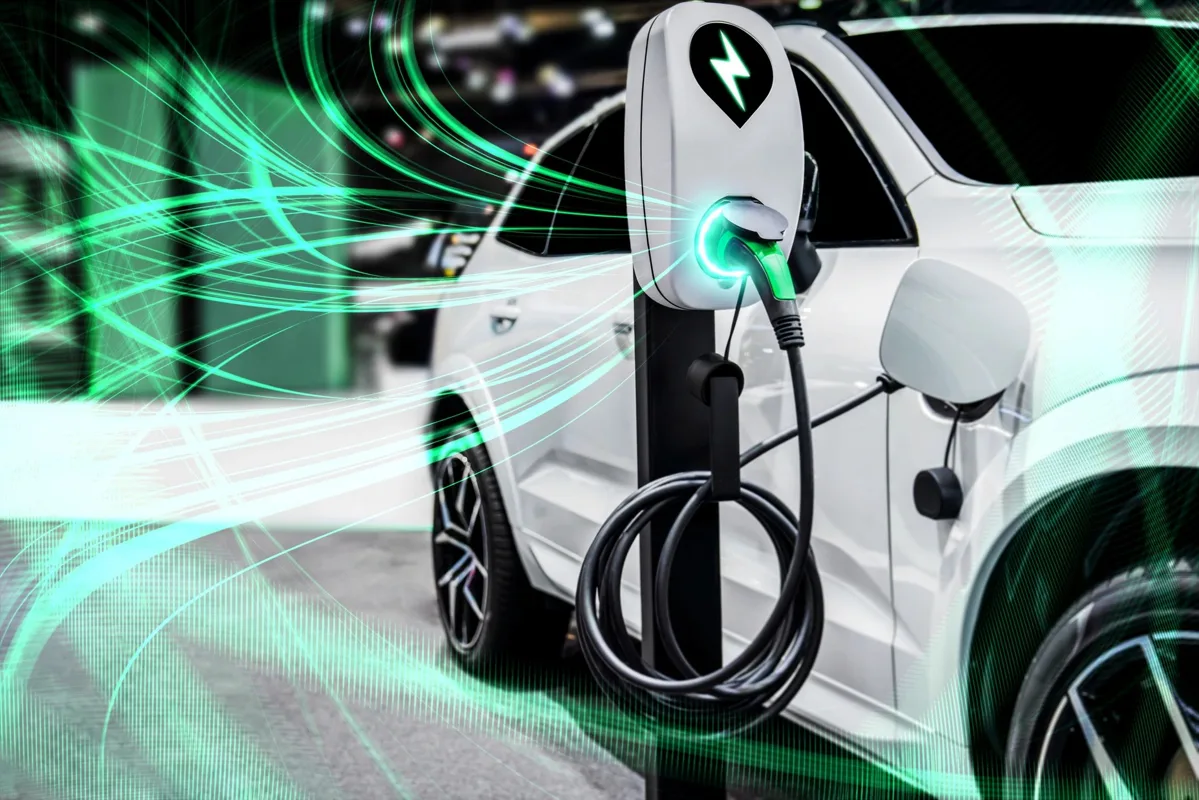
Singapore’s EV top charging stations feature various providers. Drivers must install multiple apps to use these different charging stations.
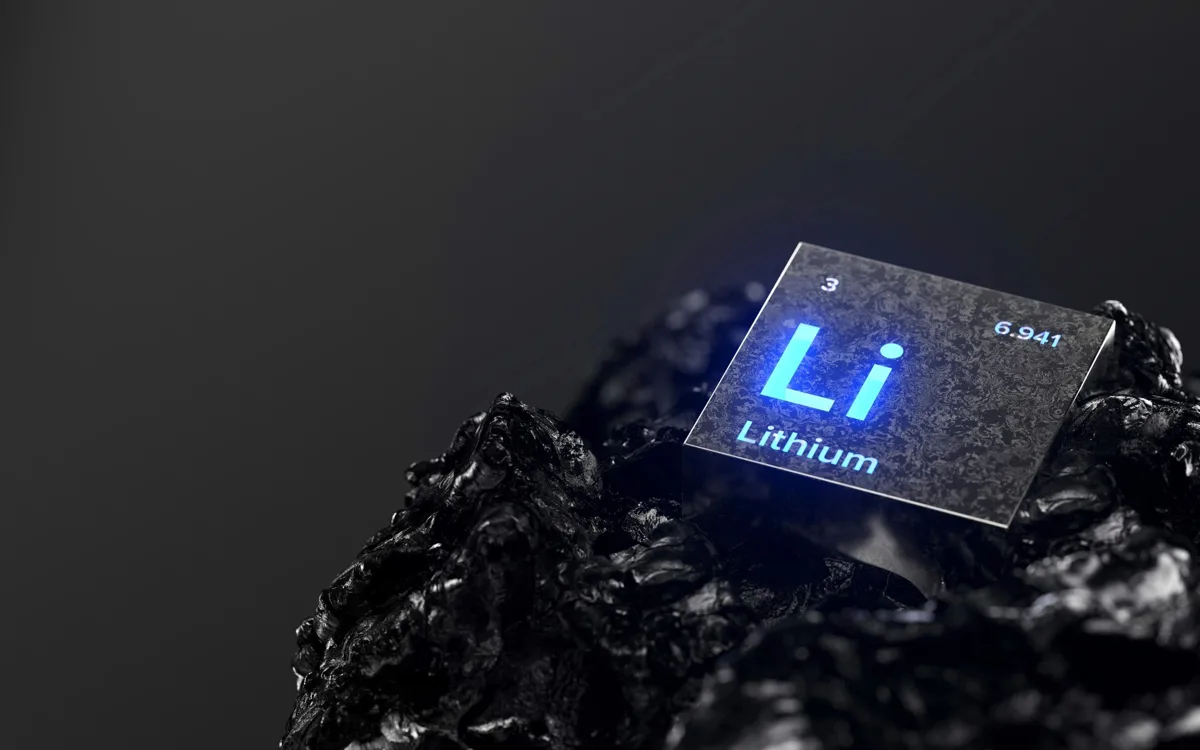
Currently in Singapore, the 2 most common types of EV Battery are the NMC (Lithium Ion) and LFP (Lithium Iron Phosphate) batteries. All top charging stations support both types of EV batteries.
The electric vehicle (EV) market has moved beyond the "one-size-fits-all" approach to battery technology. The choice of battery now defines whether a car is a budget city commuter, a long-distance cruiser, or a high-performance machine.
An important point to note when shopping for an EV is that many EV specifications in Singapore simply state “Lithium-ion”, which can easily be mistaken for NMC. To clarify, Lithium-ion is the battery family, while LFP and NMC describe different chemistries within that family. Hence lithium-ion refers to the overall battery family, not the specific chemistry. LFP and NMC are different types of lithium-ion batteries. Therefore, if an EV is listed only as “Lithium-ion”, you cannot assume it uses NMC. The actual battery chemistry must be confirmed separately, as this determines important differences in range, charging characteristics, durability, safety and cost.
Below is a breakdown of the different types of EV batteries available now or in the future, along with their respective advantages and disadvantages.
NMC is the "gold standard" for high-performance and long-range EVs. It is the most common chemistry found in premium brands like Tesla, BMW, and Audi. These batteries are prized for their energy density, meaning they can pack a lot of power into a relatively small and light package.
LFP has surged in popularity, now powering nearly half of all new EVs globally (especially mass-market models from BYD and Tesla's standard range). Instead of nickel and cobalt, it uses iron and phosphate—materials that are abundant and cheap.
Entering production, Sodium-Ion batteries are the "game-changer" for entry-level EVs. They replace lithium with sodium (common salt), making them incredibly sustainable and immune to lithium price spikes.
Long hailed as the "Holy Grail," solid-state batteries (SSB) are starting to appear in limited production and high-end prototypes in 2026. They replace the liquid electrolyte found in traditional batteries with a solid material.
While rare in pure EVs, NiMH remains the backbone of the "self-charging" hybrid market (like the Toyota Prius). It is a mature, reliable technology that has been in use for decades.
Choosing the right one: If you do a lot of long-distance driving, an NMC battery is still king. However, for most city dwellers looking for a reliable, safe car that will last 10+ years, LFP is currently the best value on the market.
Choose the guide that answers your next question.